Home Page


Salisbury Cob Wall

Tools of the Trade


Projects - Re-building Chalk Cob Walls 2010

Let me tell the story using various photos.

Cob Wall at start of project

Sometimes repair involves chalk cob blocks or bricks. Here they are made on site in a barn. Earlier reports have shown how this repair technique is used. I would like to concentrate, in the following sections, on total rebuilding using 'mass' or wet chalk cob rather than the pre-dried cob blocks.

Cob Wall at start of projectCob Wall at start of project

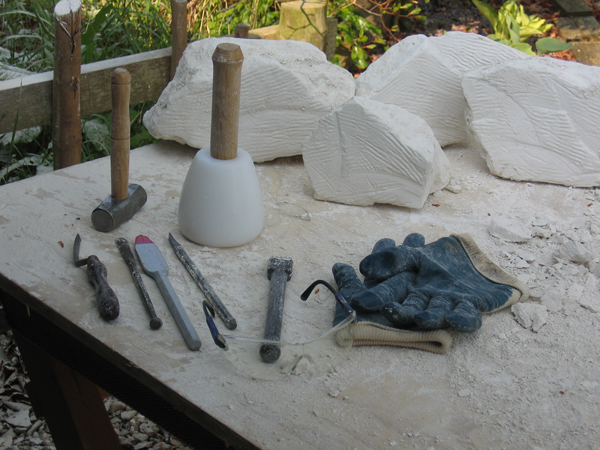
Here are some of my cobbing tools and a new set of 'thwackers' kindly made by Peter Sturt in my village with a donation going to the village church.

Cob Wall at start of projectCob Wall at start of project

On the left you can see the cob wall which was rebuilt using mass cob and is now being lime rendered and on the right you can see how the mass cob is mixed; chalk, water and straw only. The cover of the barn made this an ideal cobbing location.

Cob Wall at start of projectCob Wall at start of project

This cob wall had to be taken down and was rebuilt again using mass chalk cob as shown in the photos.

Cob Wall at start of projectCob Wall at start of project

Cob Wall at start of projectCob Wall at start of project

Above (right) is the finished wall on a rainy day.

Cob Wall at start of projectCob Wall at start of project

Here is another wall being rebuilt with mass cob. It was given a lime render and tiles to match the rest of the wall.

Cob Wall at start of projectCob Wall at start of project

Here we have an unrendered wall in the new 'Wiltshire vernacular'. Our treatment is to reduce the ground levels to below the plinth and repair the plinth to give the wall stability. The next step is to repair the cob with cob infill and ties, fit a new tin roof, leave the gap in the wall to provide a view for the clients and then fill the gap with lovely gate hurdles made by a local woodsman.

Cob Wall at start of projectCob Wall at start of project

Here the cob was very worn due to previous cement render, this was removed, repairs done with cob bricks and finally a lime render applied.

Cob Wall at start of project

I do not often work in November but as it turned out the weather was mild...lucky. The ground levels were initially reduced to expose the plinths. This cob wall needed considerable work on the plinths and several cracks needed stitching or pinning and filling. It was given a lime render to provide some protection, especially from the splashes from a busy road, and finally a new thatch.

Cob Wall at start of project

This project was a beautiful thatched chalk cob wall which had an individual grade 2 listing. Some 20 meters of wall had come down in the wind. The wall was special because the plinth was of sarsen stone and 24 inches wide, and the chalk cob was 3.5 meters high, one of the highest I have seen.

Hand mixing was not enough on this job and therefore we had to use diggers.

Cob Wall at start of project

I am often asked if shutters are required? No, that was not the way these walls were built and so you can see that we build the cob up to the required height in lifts, with no shutters even up to 3.5m as they were built 200 years ago.

Cob Wall at start of project

The dumper moves the cob from the barn to the wall and is very useful when the wall gets higher.

Cob Wall at start of project

English Heritage made a visit from their London Offices, not just to see how the work was progressing but also to see if I could assist them with their aspirations to build three copies of Neolithic chalk cob houses at the new Stonehenge Visitors Centre.

Cob Wall at start of projectCob Wall at start of project

Here we have the fallen grade 2 listed wall again. Above right is the wall fully re-built and thatched. Below is a close up of the newly built cob over the Sarsen plinth.

Cob Wall at start of project

Several factors are of interest here on the conservation side. The wall had been rendered in the past but not recently , thus it was 'the new Wiltshire vernacular' which I mentioned earlier. As there was about 180 meters of this wall I was keen not to insert a lime rendered smooth section, or render the whole wall. I reused the fallen cob and matched the cob wall in every detail. Given time it will age and darken in colour like the 200 year old original.

Cob Wall at start of project

This is a large clay cob building that is not a project of mine, rather a fine ruin in Morocco. If it was a project of mine I would be adding the comments that doing nothing is often a good conservation option. The climate is so dry that little damage is done here. Perhaps we might consider limited stabilisation repairs and some regular protection measures along the tops of the walls. Yes, returning to my initial theme, the weather also gives me some time in winter to travel.


EMAIL: brianfranklin@hotmail.co.uk | TERMS | PRIVACY | COOKIES